I Cannot Tell a Lie: Washington Knew What He Was Talking About

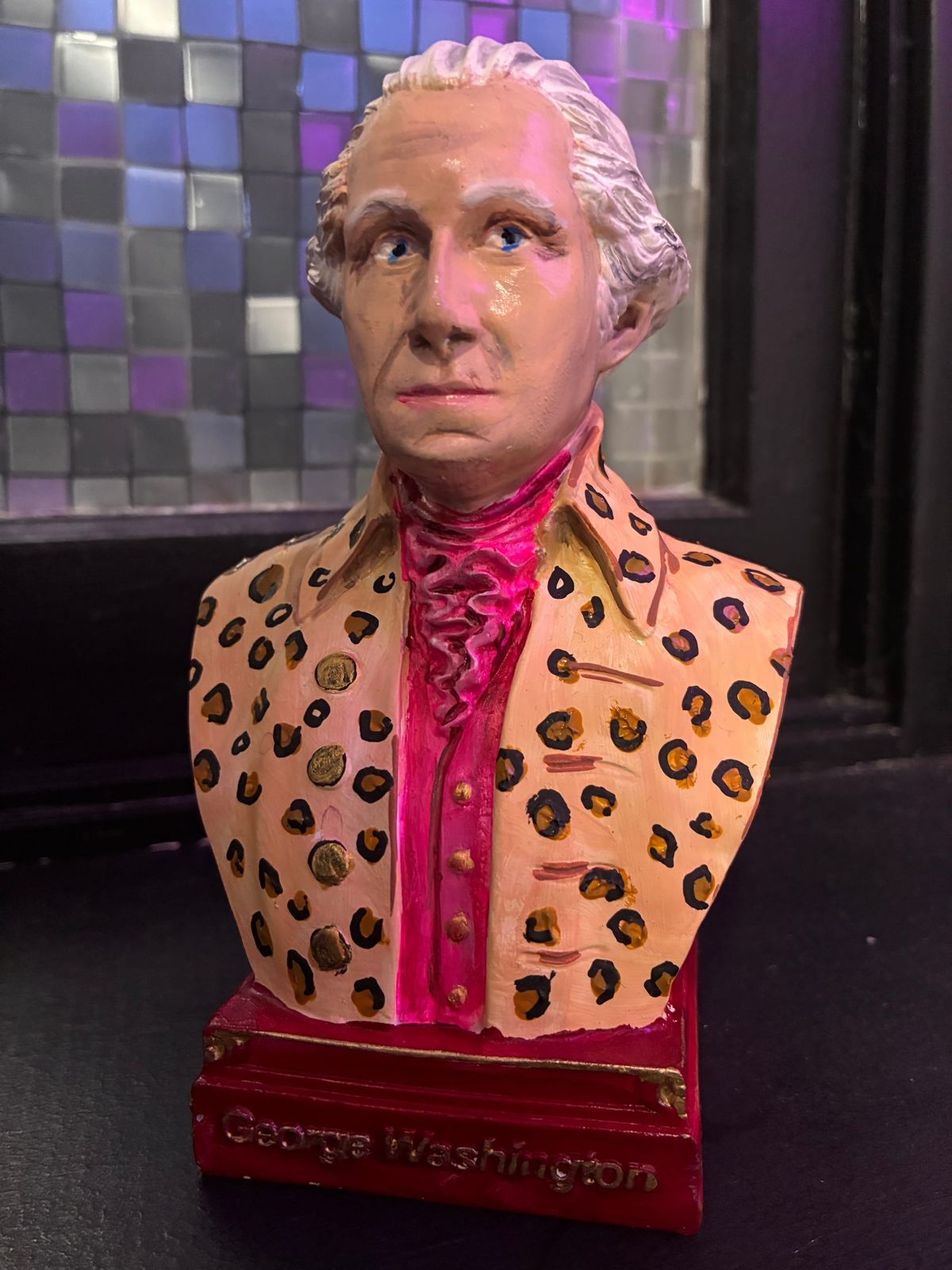
Reading through George Washington's Farewell Address, it’s hard to imagine a more prescient look at the nation 230 years later. Not only did he see the dangers of political parties, but he also counsels on quite a few topics that currently divide our nation, and his conduct in graciously stepping aside after two terms is a lesson to be learned.
Washington could clearly see the dangers in a two party system, having just survived eight years of watching the Federalists and the Democratic-Republicans in his cabinet squabble. He even went so far to identify the danger as a threat “to the permanency of your felicity as a people (Washington, 1796/n.d., para.7).” He feared the rivalry between the parties would threaten the “unity of government (Washington, 1796/n.d., para.9)” recognizing it as “a main pillar in the edifice of your real independence, the support of your tranquility at home, your peace abroad; of your safety; of your prosperity; of that very liberty which you so highly prize (Washington, 1796/n.d., para.9).” He warned that this rivalry could be “the point in your political fortress against which the batteries of internal and external enemies will be most constantly and actively (though often covertly and insidiously) directed (Washington, 1796/n.d., para.9).” Indeed one of the greatest dangers to our political stability right now is the rivalry between the two parties. These divisions have been stoked by both internal and external forces, which can be seen in the amount of money spent on political campaigns. According to PBS, “$5.5 billion dollars was spent on the race by presidential candidates, political parties and independent interest groups trying to influence federal elections (PBS News, 2024, para.1) and the Brennan Center reported that in the 2024 election, “while both sides of the aisle spent on efforts to persuade voters, spending in favor of Democrats was more likely to have fundraising as a goal, and spending in favor of Republicans was more likely to include get-out-the-vote efforts. Additionally, pro-Democratic spenders put a somewhat greater portion of ad money toward contrasting their party’s candidates with their opponents compared with pro-Republican spenders, who spent more on simply promoting their own candidates (Brennan Center, 2025, para.3).”
George Washington also foresaw many of the issues that divide us today. At one point in his address, he talks about the citizenry, making a point to refer to them as “Citizens, by birth or choice (Washington, 1796/n.d., para.10)” something that echoes the partisan divide today about birthright citizenship. Additionally, he forewarns against the blue state-red state divide we have today, when discussing the geographical differences between North and South, warning that “political parties acquire influence within particular districts [is] to misrepresent the opinions and aims of other districts (Washington, 1796/n.d., para.15).” Washington also saw the dangers in promoting other nations’ interests above our own, cautioning “a passionate attachment of one nation for another produces a variety of evils. Sympathy for the favorite nation, facilitating the illusion of an imaginary common interest in cases where no real common interest exists, and infusing into one the enmities of the other, betrays the former into a participation in the quarrels and wars of the latter without adequate inducement or justification (Washington, 1796/n.d., para.33).” One can argue that this applies to our current situation in Iran. He even drops a nugget of wisdom that the Supreme Court should consider the next time they approach something using historical context to determine its original public meaning: “But the Constitution which at any time exists, till changed by an explicit and authentic act of the whole people, is sacredly obligatory upon all (Washington, 1796/n.d., para.16).”
Unlike our current President, George Washington saw his role as President as the caretaker of the office of the Executive. Not once in the entirety of his address does he even mention the word President. In the very first line of his address, he describes the position as “a citizen to administer the executive government of the United States (Washington, 1796/n.d., para.1)” and that whoever is chosen “is to be clothed with that important trust (ibid).” In looking back at his own time as caretaker he describes it thusly: “In the discharge of this trust, I will only say that I have, with good intentions, contributed towards the organization and administration of the government the best exertions of which a very fallible judgment was capable (Washington, 1796/n.d., para.5).” He even states as one of his reasons for not seeking a third term was that his age and physical limitations are limiting his performance: “every day the increasing weight of years admonishes me more and more that the shade of retirement is as necessary to me as it will be welcome (Washington, 1796/n.d., para.5).” If only more of our politicians (on both sides of the aisle) heeded this advice.
Washington’s Farewell Address serves as a prescient look at the dangers of intense partisanship that continues today and I feel his recognition of what challenges the nation would face are remarkable considering that his words are now over two centuries old and can clearly be applied today.
References
Brennan Center for Justice, OpenSecrets, & Wesleyan Media Project. (2025). Online ad spending in 2024 election totaled at least $1.9 billion https://www.brennancenter.org/our-work/analysis-opinion/online-ad-spending-2024-election-totaled-least-19-billion
PBS News. (2024, November 6). The cost of this election. https://www.pbs.org/newshour/live-update/election-news-2024/the-cost-of-this-election
Washington, G. (n.d.). Washington’s Farewell Address. American Battlefield Trust. https://www.battlefields.org/learn/primary-sources/washingtons-farewell-address (Original work published 1796)